
How to Start Planning an African Safari: A Beginner's Guide
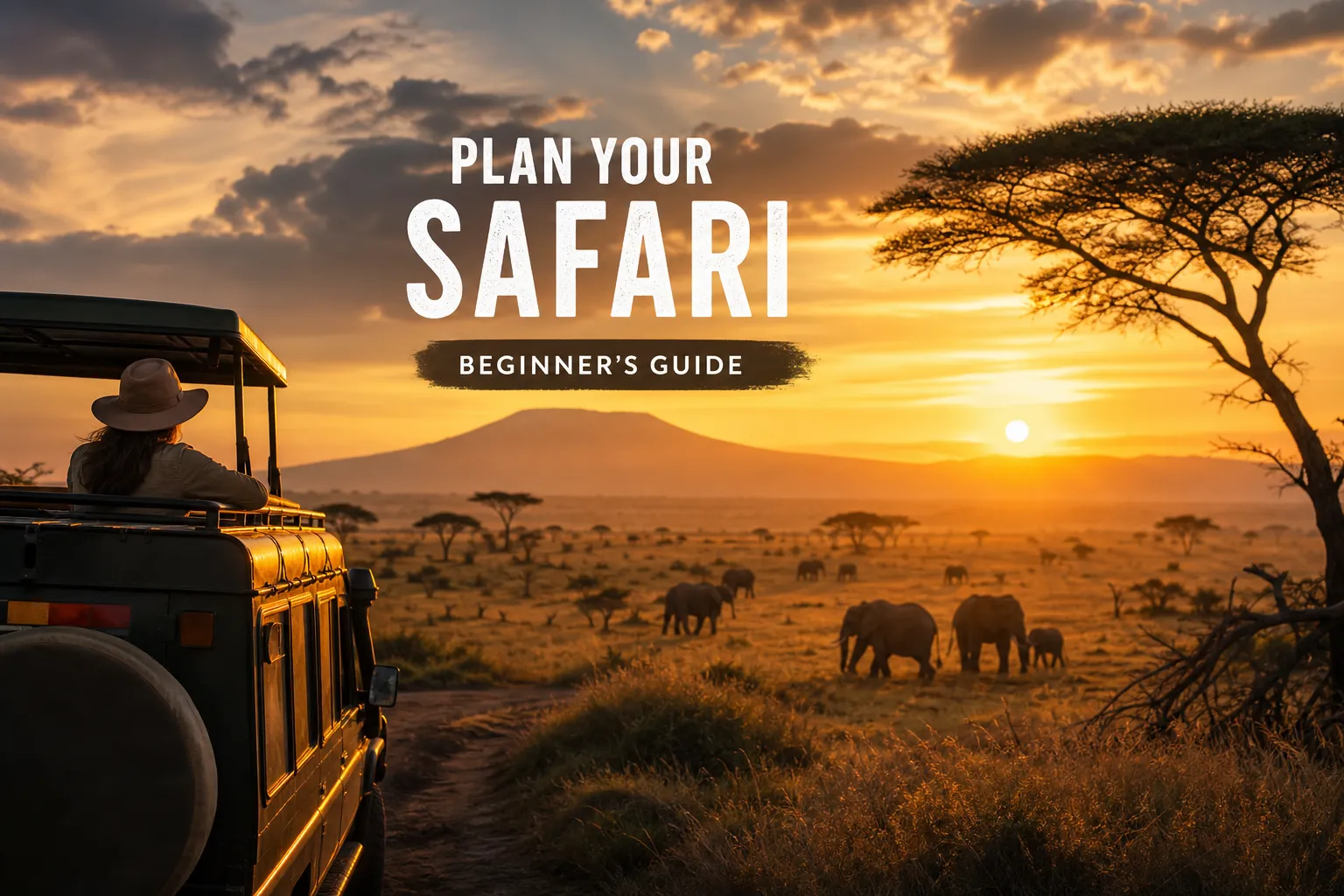
How do I start planning an African safari? That's the question most first-time travelers type into a browser before staring at hundreds of operators, dozens of parks, wildly different prices, and no obvious starting point. The paralysis is real, but it's also completely avoidable. Many travelers report feeling overwhelmed when they first start researching safaris, and the reason is almost always the same: they skip the foundational decisions and jump straight to comparing tour packages.
How do I start planning an African safari? Begin with destination and travel dates
Destination and timing are the two decisions that control every other variable in your safari plan. Your budget range, safari style, and even your packing list all shift depending on where you go and when. Lock these down first.
The four main safari regions and what makes each right for first-timers
Kenya and Tanzania are the most beginner-friendly regions by a significant margin. Kenya's Maasai Mara and Amboseli are widely used by tourists and well-served by established operators, with guides experienced in working with first-time international visitors. Tanzania's northern circuit, the Serengeti, Ngorongoro Crater, and Tarangire, is equally strong and offers some of the most iconic wildlife experiences on the continent.
South Africa's Kruger National Park is the best pick for independent travelers who want to self-drive. The roads are well-maintained, accommodation options range from basic rest camps to private lodges, and the malaria risk in certain areas is lower than in East Africa. Botswana, centered on the Okavango Delta and Chobe National Park, is the most remote and premium option of the four. It delivers extraordinary wildlife density and exclusivity, but at a cost that runs significantly higher than the others.
South Africa's Kruger National Park is the best pick for independent travelers who want to self-drive. The roads are well-maintained, accommodation options range from basic rest camps to private lodges, and the malaria risk in certain areas is lower than in East Africa. Botswana, centered on the Okavango Delta and Chobe National Park, is the most remote and premium option of the four. It delivers extraordinary wildlife density and exclusivity, but at a cost that runs significantly higher than the others.
Why your travel dates should follow wildlife patterns, not airline deals
The June through October dry season is the best overall window for wildlife viewing across East and Southern Africa. Dry conditions concentrate animals near water sources, making them far easier to find and observe on game drives. If the Great Migration's Mara River crossings are your main goal, July through October is the critical window, with August and September delivering the peak crossing action in the Maasai Mara.
January and February are excellent in the southern Serengeti for calving season, a window most first-timers overlook entirely. Hundreds of thousands of wildebeest give birth in a compressed period, and the predator activity that follows is extraordinary. The point is simple: build your travel dates around the wildlife calendar, then find flights. Doing it the other way around is a common mistake that costs people the experience they actually came for.
January and February are excellent in the southern Serengeti for calving season, a window most first-timers overlook entirely. Hundreds of thousands of wildebeest give birth in a compressed period, and the predator activity that follows is extraordinary. The point is simple: build your travel dates around the wildlife calendar, then find flights. Doing it the other way around is a common mistake that costs people the experience they actually came for.
Set your safari budget before you talk to anyone
Walking into operator conversations without a clear budget puts you at a disadvantage. You can't evaluate quotes intelligently without a realistic framework for what things cost. Here's what the numbers actually look like.
What a 5-, 7-, and 10-day safari actually costs per person
For Kenya and Tanzania, expect roughly $750 to $5,000 per person for a 5-day trip, $1,050 to $7,000 for 7 days, and $1,500 to $10,000 for 10 days, depending on whether you're traveling budget, mid-range, or luxury. South Africa runs somewhat higher. Botswana runs significantly higher, value-oriented trips often start around $6,000 for longer itineraries, with luxury well above that. As a working rule, per-day rates in the $150 to $400 range reflect budget to mid-range travel, while $500 per person per day and above is the luxury tier. For a detailed breakdown of typical costs in each country and category, see this Kenya and Tanzania safari cost guide.
These ranges are starting points for comparison, not fixed prices. The same 7-day itinerary can cost $2,000 or $7,000 per person depending on accommodation category, season, and group size. Your job is to understand the range so that no single quote surprises you.
These ranges are starting points for comparison, not fixed prices. The same 7-day itinerary can cost $2,000 or $7,000 per person depending on accommodation category, season, and group size. Your job is to understand the range so that no single quote surprises you.
What most budget estimates leave out
First-timers routinely underestimate the full cost of an African safari trip because operator quotes don't always include everything. Here's what to account for beyond the quoted safari price:
* International flights from the U.S., roughly $900 to $1,800 round trip as a general estimate, though actual prices vary considerably by origin city, season, and how far in advance you book
* Park entry fees, which are often listed separately; in East Africa, these can add approximately $50 to $100 per day per person depending on the park and season
* Tips for guides, trackers, and camp staff, a meaningful line item over a 7- to 10-day trip; tipping practices vary by country and operator, so ask your operator for guidance on typical amounts
* Travel insurance with emergency medical evacuation coverage, which can cost $50,000 or more without a policy
* Visas and health costs, including vaccinations and antimalarial prescriptions
* Optional bush flights between parks, which save hours of rough-road driving but add to the total
Before you compare any quotes, ask each operator explicitly what is and is not included in their daily rate, and request a line-item breakdown. That single question surfaces hidden costs like park fees and activity supplements that can easily add hundreds of dollars to a quote that looked competitive at first glance.
* International flights from the U.S., roughly $900 to $1,800 round trip as a general estimate, though actual prices vary considerably by origin city, season, and how far in advance you book
* Park entry fees, which are often listed separately; in East Africa, these can add approximately $50 to $100 per day per person depending on the park and season
* Tips for guides, trackers, and camp staff, a meaningful line item over a 7- to 10-day trip; tipping practices vary by country and operator, so ask your operator for guidance on typical amounts
* Travel insurance with emergency medical evacuation coverage, which can cost $50,000 or more without a policy
* Visas and health costs, including vaccinations and antimalarial prescriptions
* Optional bush flights between parks, which save hours of rough-road driving but add to the total
Before you compare any quotes, ask each operator explicitly what is and is not included in their daily rate, and request a line-item breakdown. That single question surfaces hidden costs like park fees and activity supplements that can easily add hundreds of dollars to a quote that looked competitive at first glance.
Choose the safari style that matches your budget and comfort level
Most first-timers default to whatever style the first operator they contact happens to offer. Because safari style and budget are closely linked, your accommodation category sets your per-day floor, making a deliberate choice before you reach out to anyone produces much better results.
The five main styles: from self-drive to fly-in lodge
Self-drive is the least expensive option and works especially well in South Africa's Kruger, where park roads are paved and rest camps are easy to navigate independently. Overland group safaris and mobile camps sit in the budget-to-mid-range tier; mobile camps tend to be more immersive because they're set up in remote wilderness areas away from the main lodge circuit. Permanent lodges and tented camps are usually mid-range to luxury, offering en-suite bathrooms, included game drives, and managed logistics. Fly-in packages top the price range because you're paying for light aircraft transfers on top of accommodation, but they save significant time when parks are far apart.
One thing worth noting: a "luxury" experience doesn't require a fly-in itinerary. Many permanent tented camps in the Serengeti and Maasai Mara deliver exceptional quality at more moderate prices than a fly-heavy package. Don't assume the most expensive style is the only way to have a premium experience.
One thing worth noting: a "luxury" experience doesn't require a fly-in itinerary. Many permanent tented camps in the Serengeti and Maasai Mara deliver exceptional quality at more moderate prices than a fly-heavy package. Don't assume the most expensive style is the only way to have a premium experience.
Which style suits a first-timer specifically
A lodge or permanent tented camp is the most reliable first-safari choice. Guides are included, logistics are handled for you, and the quality of the experience is consistent regardless of your travel experience level. Self-drive in Kruger is an excellent budget alternative for independent, confident travelers. Overland trucks work for budget group travel, but first-timers who want a more personal wildlife experience and flexible sighting time will find the trade-offs frustrating. In remote Botswana, a fly-in component is close to essential; in Kenya and Tanzania, it's an upgrade rather than a requirement.
Sketch a rough itinerary, then compare operators side by side
You don't need a final, detailed itinerary before approaching operators. You need a rough framework covering destination, trip length, travel dates, budget range, and group size. That's enough to get meaningful, comparable quotes.
Sample frameworks for 5, 7, and 10 days in East Africa
A 5-day Tanzania northern circuit covering Lake Manyara, the Serengeti, and Ngorongoro is doable, but it moves fast. Driving times are real: the Ngorongoro area to the central Serengeti takes roughly 3 to 4 hours depending on route and conditions, and most transfer days split their time between the road and actual game viewing. A 5-day trip works as a first safari, just go in knowing you'll feel the pace.
Seven days is the sweet spot for most first-timers. It allows two full days in the Serengeti without the one-night scramble, and the itinerary breathes enough to include proper crater time at Ngorongoro. A 10-day trip opens up extended Serengeti stays, a second sector, or an additional destination like Tarangire without any sense of rushing. As a general principle, fewer parks with more nights at each produces far better wildlife encounters and a less exhausting trip than trying to tick five parks in a single week.
Seven days is the sweet spot for most first-timers. It allows two full days in the Serengeti without the one-night scramble, and the itinerary breathes enough to include proper crater time at Ngorongoro. A 10-day trip opens up extended Serengeti stays, a second sector, or an additional destination like Tarangire without any sense of rushing. As a general principle, fewer parks with more nights at each produces far better wildlife encounters and a less exhausting trip than trying to tick five parks in a single week.
How to collect competing quotes without spending weeks emailing operators
Once you have a rough itinerary in hand, the next step is getting operator quotes. Most first-timers do one of two things: they contact a single operator and accept whatever price comes back, or they spend weeks emailing operators one by one with no systematic way to compare what they receive. Both approaches lead to poor decisions. If you're wondering whether to book directly with a local operator or use an agent, see the discussion on is it better to book a safari directly with a local operator or via an agent?
This is exactly where SafariAnswers is built to help. Submit one detailed inquiry, including your destination, travel dates, trip length, budget range, and group size, and vetted local operators across East and Southern Africa send back competing, personalized bids. You compare them side by side in one place, with full visibility into what each quote includes. No international middlemen adding markup, no weeks of scattered inbox threads, and full confidence that every operator on the platform has been pre-screened for legal registration, local expertise, and traveler reviews. For an example of how to structure a quote request and the kind of detailed itinerary information that helps operators respond accurately, review this planning a trip to Kenya and Tanzania quote request and a detailed itinerary.
This is exactly where SafariAnswers is built to help. Submit one detailed inquiry, including your destination, travel dates, trip length, budget range, and group size, and vetted local operators across East and Southern Africa send back competing, personalized bids. You compare them side by side in one place, with full visibility into what each quote includes. No international middlemen adding markup, no weeks of scattered inbox threads, and full confidence that every operator on the platform has been pre-screened for legal registration, local expertise, and traveler reviews. For an example of how to structure a quote request and the kind of detailed itinerary information that helps operators respond accurately, review this planning a trip to Kenya and Tanzania quote request and a detailed itinerary.
Handle the paperwork: visas, vaccines, and insurance
The logistics side of an African safari trip is manageable, but it requires lead time. Don't leave this until the month before you depart.
Visa requirements for U.S. passport holders by destination
Kenya requires an electronic travel authorization (eTA) that must be obtained before arrival. Tanzania requires a visa for U.S. travelers. South Africa, Botswana, and Namibia generally allow visa-free entry for U.S. tourists on short stays, though passport validity and blank-page requirements apply. Zambia typically requires a visa, often obtainable online or on arrival depending on current rules. The practical takeaway: verify entry requirements on the official government or embassy website for each country on your itinerary at least three months before departure, because policies change. For up-to-date entry and health advisories from a primary source, check the U.S. Embassy in Kenya COVID-19 information and the equivalent embassy pages for each destination.
Health precautions, vaccinations, and travel insurance for safari travel
Hepatitis A, typhoid, and routine vaccines are the core starting point for most East and Southern Africa itineraries. Malaria prevention is important in the majority of safari regions, so schedule a visit with a travel medicine doctor 6 to 8 weeks before departure, not the week before. Yellow fever documentation is required if your routing passes through a yellow-fever-risk country, even in transit, so check your full flight path, not just your destination country.
Standard U.S. health insurance and Medicare do not cover overseas medical care. Every American traveling on safari should carry travel medical insurance that includes emergency medical evacuation coverage. A remote-area evacuation can cost $50,000 or more without coverage. Most experienced safari travelers and travel medicine advisors recommend policies with at least $250,000 in evacuation coverage as a practical minimum; confirm the policy explicitly covers safari activities and remote wilderness areas before you buy. See options for policies that specifically cover safari activities from providers like World Nomads when comparing plans.
Standard U.S. health insurance and Medicare do not cover overseas medical care. Every American traveling on safari should carry travel medical insurance that includes emergency medical evacuation coverage. A remote-area evacuation can cost $50,000 or more without coverage. Most experienced safari travelers and travel medicine advisors recommend policies with at least $250,000 in evacuation coverage as a practical minimum; confirm the policy explicitly covers safari activities and remote wilderness areas before you buy. See options for policies that specifically cover safari activities from providers like World Nomads when comparing plans.
The most common first-timer mistakes and how to avoid them
**Waiting too long to start planning**
The best lodges and camps during peak season (July through October) book out well in advance, with the most in-demand properties filling earliest. For first-time U.S. travelers targeting peak-season East Africa, 12 to 18 months of lead time is the realistic planning window; 9 to 12 months is workable for shoulder-season travel or more flexible itineraries. First-timers who begin planning 8 weeks before their intended travel date routinely find their preferred camps are fully booked, which forces compromises on dates, accommodation quality, or both. For guidance on when to book and realistic lead times, consult reputable booking resources that track property availability and best times to visit specific parks such as the Maasai Mara.
**Choosing the cheapest quote without understanding what's included**
A low headline quote that excludes park fees, meals, and transfers can easily cost more in total than a higher all-inclusive quote. Before accepting any bid, ask what is included in the daily rate, which park fees are extra, how many game drives per day are included, and what the cancellation and payment terms are. This is also why comparing multiple quotes from vetted operators matters so much: it's nearly impossible to evaluate a single quote in isolation without other bids for reference.
**Over-packing the itinerary with too many parks**
Three parks in 5 days sounds comprehensive, until two of those days are spent on rough roads between parks. A Serengeti-to-Ngorongoro-to-Tarangire loop, for instance, can consume nearly a full day of driving, leaving far less time for actual game viewing than most travelers expect. The best first safaris prioritize depth over breadth: two to three parks with two to three nights at each produces far better wildlife encounters and a less exhausting trip than trying to tick five parks in a single week.
The best lodges and camps during peak season (July through October) book out well in advance, with the most in-demand properties filling earliest. For first-time U.S. travelers targeting peak-season East Africa, 12 to 18 months of lead time is the realistic planning window; 9 to 12 months is workable for shoulder-season travel or more flexible itineraries. First-timers who begin planning 8 weeks before their intended travel date routinely find their preferred camps are fully booked, which forces compromises on dates, accommodation quality, or both. For guidance on when to book and realistic lead times, consult reputable booking resources that track property availability and best times to visit specific parks such as the Maasai Mara.
**Choosing the cheapest quote without understanding what's included**
A low headline quote that excludes park fees, meals, and transfers can easily cost more in total than a higher all-inclusive quote. Before accepting any bid, ask what is included in the daily rate, which park fees are extra, how many game drives per day are included, and what the cancellation and payment terms are. This is also why comparing multiple quotes from vetted operators matters so much: it's nearly impossible to evaluate a single quote in isolation without other bids for reference.
**Over-packing the itinerary with too many parks**
Three parks in 5 days sounds comprehensive, until two of those days are spent on rough roads between parks. A Serengeti-to-Ngorongoro-to-Tarangire loop, for instance, can consume nearly a full day of driving, leaving far less time for actual game viewing than most travelers expect. The best first safaris prioritize depth over breadth: two to three parks with two to three nights at each produces far better wildlife encounters and a less exhausting trip than trying to tick five parks in a single week.
Your next steps: a clear sequence to get started
Starting to plan an African safari follows a logical sequence, and the process only feels overwhelming before you break it into individual decisions. Choose your region and travel dates first, grounded in wildlife seasonality rather than flight prices. Set a realistic total budget that includes flights, fees, tips, and insurance. Pick a safari style that matches your comfort level and destination. Sketch a rough itinerary with trip length and priority parks in mind. Then sort out visas and health requirements well in advance of your travel date.
The final step is collecting operator quotes, and that's where most first-timers either overpay or lose weeks of time. SafariAnswers was built specifically to solve that problem: submit one inquiry, receive competing personalized bids from vetted local operators across East and Southern Africa, and compare them side by side before committing to anything. No international middlemen adding markup, no weeks of scattered inbox threads, and full confidence that every operator has been screened before they ever reach your inbox. When you're ready to review options, you can also Browse safari Inquiries | SafariAnswers to see active offers and examples of past itineraries.
If you've been asking yourself, "How do I start planning an African safari?", you now have the answer. Pick your region, set your dates, post your inquiry, and take the first real step. That paralysis you felt when you first opened the browser? It's gone.
The final step is collecting operator quotes, and that's where most first-timers either overpay or lose weeks of time. SafariAnswers was built specifically to solve that problem: submit one inquiry, receive competing personalized bids from vetted local operators across East and Southern Africa, and compare them side by side before committing to anything. No international middlemen adding markup, no weeks of scattered inbox threads, and full confidence that every operator has been screened before they ever reach your inbox. When you're ready to review options, you can also Browse safari Inquiries | SafariAnswers to see active offers and examples of past itineraries.
If you've been asking yourself, "How do I start planning an African safari?", you now have the answer. Pick your region, set your dates, post your inquiry, and take the first real step. That paralysis you felt when you first opened the browser? It's gone.