
Maasai Mara vs Serengeti: Which Is Better for First Timers
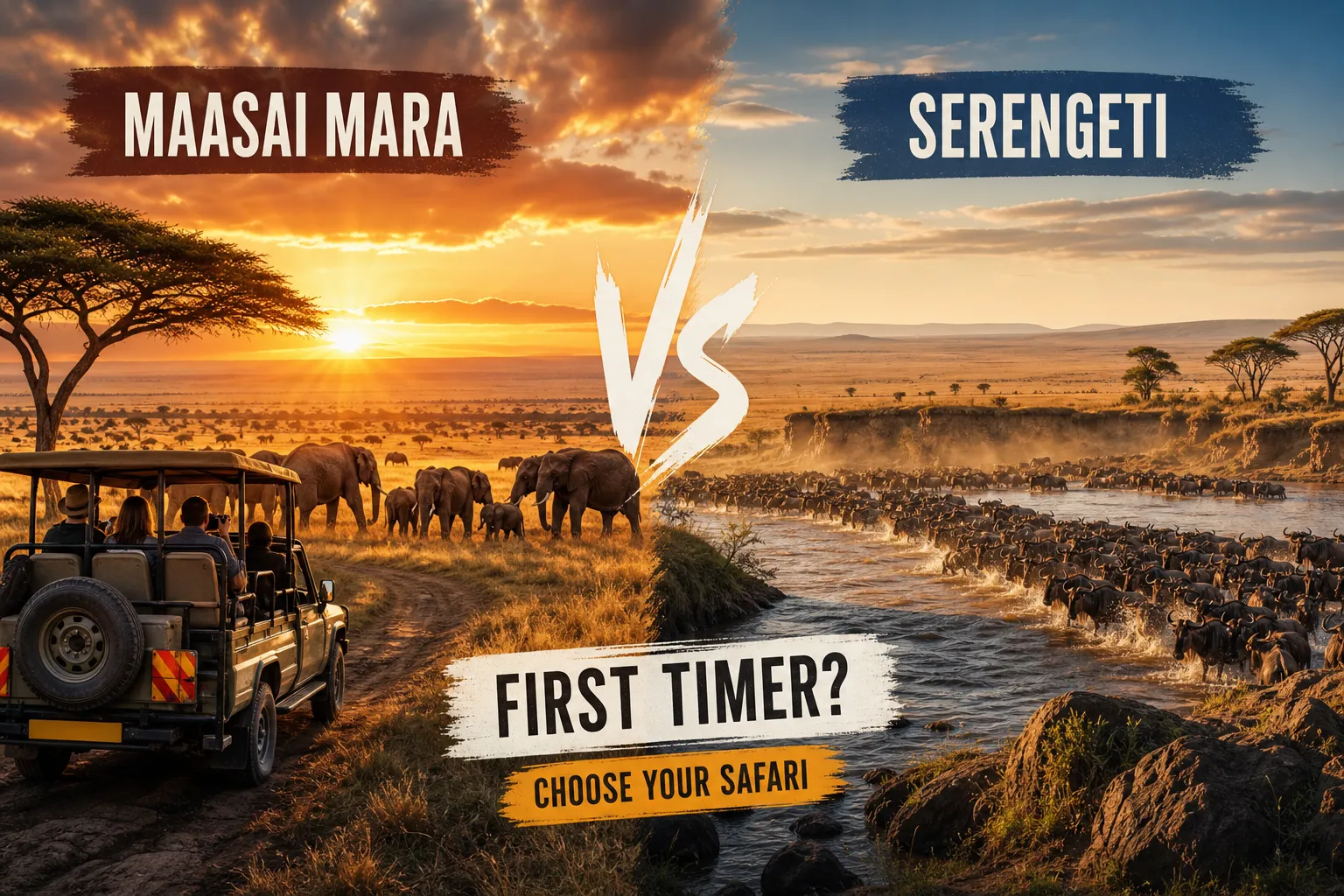
Maasai Mara vs Serengeti, which is better for first timers? It's the most common question new safari planners ask, and the answer isn't simply one park or the other. Both sit at the top of every Africa bucket list. Both host the Great Migration. And both will stop a first-time safari traveler in their tracks the moment a lioness walks within twenty feet of the vehicle. But the Maasai Mara and the Serengeti are not interchangeable, and picking the wrong one for your timeline, budget, or travel style won't leave you with regret so much as missed sightings and avoidable logistics headaches.
This guide breaks down the Maasai Mara vs Serengeti comparison across the factors that actually matter for a first trip: wildlife density, migration timing, getting there from the US, total cost by tier, and what kind of experience each park actually delivers. By the end, you'll know which park fits your situation, and you'll have a clear path to getting real, side-by-side quotes from vetted local operators before you commit to anything.
This guide breaks down the Maasai Mara vs Serengeti comparison across the factors that actually matter for a first trip: wildlife density, migration timing, getting there from the US, total cost by tier, and what kind of experience each park actually delivers. By the end, you'll know which park fits your situation, and you'll have a clear path to getting real, side-by-side quotes from vetted local operators before you commit to anything.
Wildlife Density: Maasai Mara vs Serengeti for First-Time Safari Goers
The most important structural difference between these two parks is size. The Maasai Mara covers roughly 1,510 square kilometers. The Serengeti covers 14,750. That difference in scale shapes the entire experience, especially when you're working with a short trip window.
Short Trip or First-Timer? The Mara's Density Works in Your Favor
In the Mara, wildlife is concentrated in predictable corridors, and the smaller ecosystem means animals are rarely far from the road. First-timers on a 2 to 4 day trip typically rack up Big Five sightings faster and spend less time driving between encounters. Big cat density in the Mara is notably high, and game drives feel efficient without feeling rushed. If you have a long weekend or a tight itinerary, the Mara is built for that kind of trip.
The recommended minimum for a first visit is 3 to 4 nights, with 5 nights being the real sweet spot. That's enough time for morning and afternoon game drives without feeling like you're scrambling, and enough flexibility to wait out a slow morning and still finish the day with strong sightings.
The recommended minimum for a first visit is 3 to 4 nights, with 5 nights being the real sweet spot. That's enough time for morning and afternoon game drives without feeling like you're scrambling, and enough flexibility to wait out a slow morning and still finish the day with strong sightings.
When the Serengeti's Scale Becomes a Real Advantage
At 5 to 10 days, the Serengeti's size stops being a constraint and starts being the whole point. Greater habitat diversity means more species variety, denser bird life, and a genuinely different sense of wilderness. You can spend two days in the central Seronera area, move to the western corridor, and finish in the northern Lobo zone, three meaningfully different safari experiences within one park. The tradeoff is real: more distance between sightings, more complex camp placement decisions, and more planning required to optimize the route. For a first-timer with a week or more, that complexity pays off. For someone with four days, it doesn't.
Great Migration Timing, Serengeti vs Maasai Mara for First Timers
The most common question from first-time safari planners is some version of "when do I go to see the migration?" The answer depends heavily on which park you're visiting, because the herds move constantly across an enormous landscape, and what "seeing the migration" means varies a lot by month.
River Crossing Season in the Maasai Mara
The Mara's migration window runs from late July through October, with August and September offering the highest odds of witnessing a Mara River crossing. The wildebeest herds typically arrive from the Serengeti in late July, and crossing activity peaks through early October before the herds push south again. Crossings are never guaranteed, herd movement depends on rainfall, grass conditions, and factors no guide can fully predict, but targeting August and September puts you in the statistically strongest position. Keep in mind that this is also peak season: lodge rates climb, and popular crossing points can draw 20 to 40 vehicles or more during an active crossing. For an overview of the migration's timing and typical crossing windows in Kenya, see this Great Migration guide for the Maasai Mara: Great Migration in the Maasai Mara.
The Serengeti's Longer Migration Window and What It Means for Planning
The Serengeti offers more seasonal flexibility because the migration cycles through different zones year-round. The northern Serengeti hosts the herds from June through October and tends to have lower vehicle density than the Mara during the same period, with far fewer vehicles at any given sighting. A January trip to the southern Serengeti near Ndutu puts you in the calving season, when thousands of wildebeest calves are born within weeks. A June visitor to the western corridor hits the Grumeti River crossings before the herds push north. The Serengeti gives you more entry points to the migration story, but it also requires more upfront planning to match your travel dates to the right zone. Working with a local Tanzanian operator who knows the seasonal patterns well makes that planning significantly easier. For a broader look at how the migration moves through Tanzania, consult this Serengeti migration overview: Serengeti Great Migration guide.
Getting There: Flight Logistics and Transfer Reality
Logistics are a genuine differentiator for first-timers flying from the US, and the routes into each park are meaningfully different in complexity and total travel time.
The Nairobi Gateway: Why the Mara Route Is Straightforward
Most US travelers fly into Nairobi's Jomo Kenyatta International Airport, then connect to Nairobi Wilson Airport for a 45 to 60 minute domestic flight to one of the Mara's airstrips. Airlines like AirKenya, Safarilink, and Fly ALS run regular scheduled service on this route, with typical one-way fares running $150 to $300 per person. Alternatively, the road transfer from Nairobi runs 5.5 to 6.5 hours depending on the gate and road conditions. The route is well-established, operators know it cold, and total time from Nairobi arrival to camp is typically half a day or less when flying. For detailed logistics on flights, transfers, and common airstrips into the Mara, see this practical getting there guide: Getting to the Maasai Mara.
Reaching the Serengeti from Kilimanjaro
US travelers heading to the Serengeti usually fly into Kilimanjaro International Airport (JRO) and connect to one of the park's bush airstrips via domestic charter or scheduled service. The route is efficient when handled correctly, but it involves more airstrip connections and sometimes a short road transfer at the other end. One important note: direct overland travel between the Mara and the Serengeti is not practical. There are no public border crossings open to tourist traffic that make the Kenya-Tanzania overland route feasible, and the distance between the two parks makes any such attempt logistically unrealistic. Plan each park as a separate destination and fly into the appropriate gateway rather than attempting to combine them overland.
Maasai Mara or Serengeti for a First Safari: Logistics and Costs by Tier
Safari pricing varies widely by season, operator, and what's included in the package, but the broad tiers for each park give you a working framework before you start collecting quotes.
Budget and Mid-Range: Where Each Park Stands
For a 3-day budget safari, the Maasai Mara runs roughly $300 to $850 per person, while entry-level Serengeti options start slightly lower at $250 to $600. Mid-range options in the Mara run $540 to $1,290 for 3 days; the Serengeti mid-range sits at $700 to $1,500 for the same duration. Both parks have solid tented camp options at mid-range that deliver an authentic experience without a luxury price tag. If you're specifically exploring affordable cross-border options, review these Kenya & Tanzania budget safari packages for examples of budget itineraries. Mid-range camps in the Mara ecosystem, including options like Ashnil Mara Camp, Mara Simba Lodge, and Zebra Plains Mara Camp, sit in this range and are well-regarded among first-timers who want comfort and reliable guiding, for comparisons of mid-range choices see this Kenya midrange safari packages.
Luxury Tier and What Drives Serengeti Costs Higher
Luxury camps in the Mara start around $860 to $2,375 for 3 days, while the Serengeti's premium tier starts at $1,200 to $3,000 for 3 nights and climbs significantly for mobile camps positioned to follow the migration. Tanzania's conservation fees and Serengeti park entrance fees also run higher than the Mara's community conservancy fees. Factor those fees into any Serengeti budget comparison because they add meaningfully to the total cost per person, per day. The number of game drives included, concession access, and whether a fly-in is bundled all vary by operator, which is exactly why comparing actual bids from multiple sources matters before you finalize anything. If you want a quick tool to estimate Masai Mara costs as you compare quotes, try this Masai Mara cost calculator: calculate Masai Mara safari cost.
Crowd Levels, Trip Length, and Matching the Park to Your Travel Style
The right park for a first safari isn't just about wildlife or migration timing. It's also about what kind of experience you want to walk away with.
The Mara: Concentrated, Accessible, and High-Impact
The Mara's peak season brings more vehicles to popular crossing points, but the ecosystem's game density means you're rarely disappointed even when the reserve is busy. The compact size makes it ideal for first-timers who want maximum sightings per day and a camp that feels close to the action. A 3 to 4 night stay is a workable minimum, and 5 nights gives you the room to really settle in. If you want a confidence-building first safari that delivers consistent wildlife encounters without requiring a complicated itinerary, the Mara is built for exactly that.
The Serengeti: Vast, Remote, and Better for Longer First Trips
Outside of the northern Serengeti's peak crossing months, crowd levels are noticeably lower than the Mara, and sightings often happen with just a handful of vehicles rather than a convoy. The Serengeti rewards travelers who have a week or more to commit, since moving through the central Seronera, western corridor, and northern Lobo zones in sequence produces a genuinely varied experience. For a first-timer with 7 to 10 days and a higher budget, the Serengeti delivers a more immersive safari with greater habitat diversity and a scale that the Mara simply can't replicate.
How to Compare Vetted Operator Bids for Both Parks Before You Book
Once you've identified which park fits your dates, budget, and trip length, the next question is who to book with and whether the price you're being quoted is fair. That's where most first-time safari planners get stuck, or worse, end up paying too much for too little.
Why Comparing Bids from Local Operators Matters for First-Timers
International travel agencies typically add margins of 20 to 40 percent on top of what local Kenyan and Tanzanian operators charge directly. A first-timer booking through a familiar US-based agency often ends up with a generic itinerary at a premium price, with no real way to evaluate whether the operator is reputable or whether the guide is experienced. What separates a memorable first safari from an average one is usually the guide, not the park. Experienced local guides know where the leopard has been denning, which crossing points the herds favor in a given week, and how to read animal behavior in real time. That knowledge doesn't come from a brochure. If you're weighing whether to book a safari directly with a local operator or via an agent, this discussion lays out the tradeoffs and can help you decide which route makes sense for your comfort level and budget.
One Inquiry, Competing Bids from Kenya and Tanzania Operators
SafariAnswers lets you submit a single safari inquiry covering your destination preferences, travel dates, group size, and budget, then receive competing, personalized itinerary bids from pre-vetted local operators in both Kenya and Tanzania. You compare real quotes side by side, ask follow-up questions directly through the platform, and read reviews from past travelers before committing to anything. For a first-timer still weighing the Mara against the Serengeti, seeing actual itineraries and real prices in one place is often what makes the final call clear. Local operators who work the Mara or Serengeti year-round will also tell you honestly whether your target dates and budget are realistic for the experience you're after.
The Bottom Line: Which Park Should You Choose?
When weighing Maasai Mara vs Serengeti, which is better for first timers, the answer comes down to time and timing. Choose the Maasai Mara if you have 3 to 5 days, want maximum wildlife density from day one, and are traveling between July and October to target the river crossing season. Choose the Serengeti if you have 7 or more days, value scale and habitat variety, or are traveling outside the Mara's prime migration window and want the flexibility of a park where the migration is present in some zone year-round.
Both parks are exceptional for a first safari. The right answer depends entirely on your travel dates, your budget, and how much time you have on the ground. The practical next step isn't more research, it's getting real bids from local experts who know these parks in every season and can build an itinerary around what you actually want to see. SafariAnswers is built to make that step fast, transparent, and free to start.
Both parks are exceptional for a first safari. The right answer depends entirely on your travel dates, your budget, and how much time you have on the ground. The practical next step isn't more research, it's getting real bids from local experts who know these parks in every season and can build an itinerary around what you actually want to see. SafariAnswers is built to make that step fast, transparent, and free to start.